
af Mathias Juul Frost
The formation of Venice is curious. Originally developed in the 5th century as small, independent islands, each consisting of housing, a square and a church, forming small compact self-sufficient communities. As Venice grew in population and influence strengthened by it’s maritime power, these isolated islands began connecting through bridges. By the middle ages, this transformation formed a cohesive urban fabric of connected yet independent communities.
The functional building blocks of these early islands, creates a rhythm between tension and release. The narrow, winding streets acts as arteries, directing the flow of people. It compresses the horizontal plane and evokes a sense of focus and vibrance — breathing in. Upon reaching the square, the tension finds it’s release —the horizontal plane widens, the space opens up, allowing for rest and to breathe out.
At the widest of spaces, the square, a vertical plane emerges through the church. This spiritual connection creates a space of contemplation, grounding the community both physically and emotionally. The square around the church becomes the city’s social glue — a playground, a meeting point and a gathering space that nurtures human connection.

This dynamic interplay between compression and expansion mirrors cycles of human activity: effort and reward, focus and rest, solitude and social connection. It is a rhythm essential to urban health. In Venice, the frequency in which the city’s spatial fabric oscillates between tension and release, is further increased by the presence of the waterways, being boundaries, punctuating the urban rhythm and heightening a sense of awareness. This both intensifies the vibrancy of the city and offers a point of release. The canals mark a transitional space, introducing moments of pause and reflection, a passage from one urban experience to another.
Tension, in this context, is not a negative force but one that provides vibrancy and vitality to the city. It keeps inhabitants physically active, mentally engaged, and socially connected. The tension and release inherent in Venice’s layout embody a balance, that encourages movement while offering moments for rest and reflection.
As we oscillate between the states of the city, we oscillate between modes of being — being in the city, occupying the city, passing through and pausing within. The city is only as good as its capacity to frame and support diverse modes of being.

Even for the most rigid of urban frameworks, human adaptability finds ways of soften and inhabit space. This is true for most cities. Yet in Venice, perception often reduces the city to a place mainly occupied by tourists.
Beneath the surface, another rhythm persists:

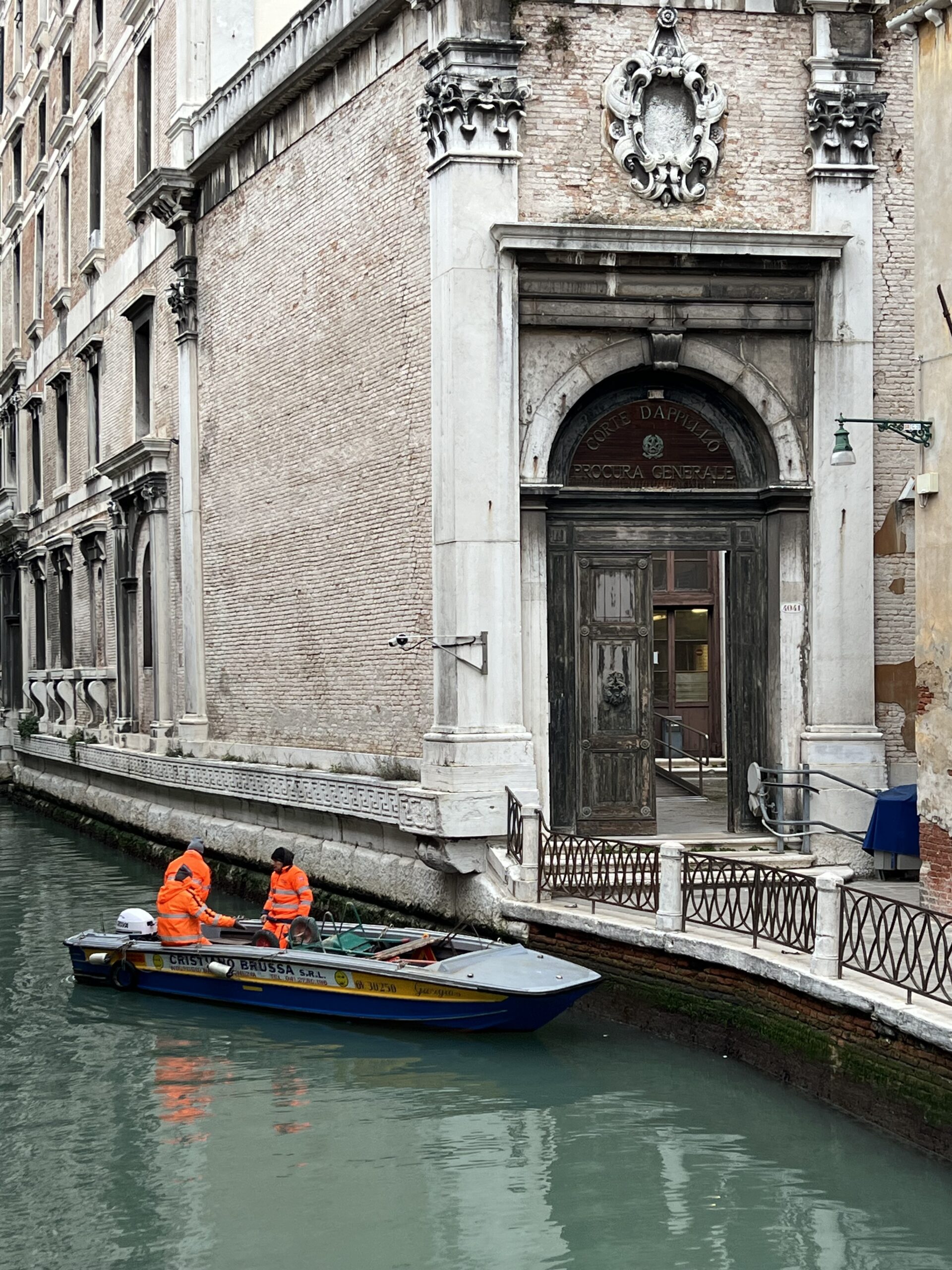
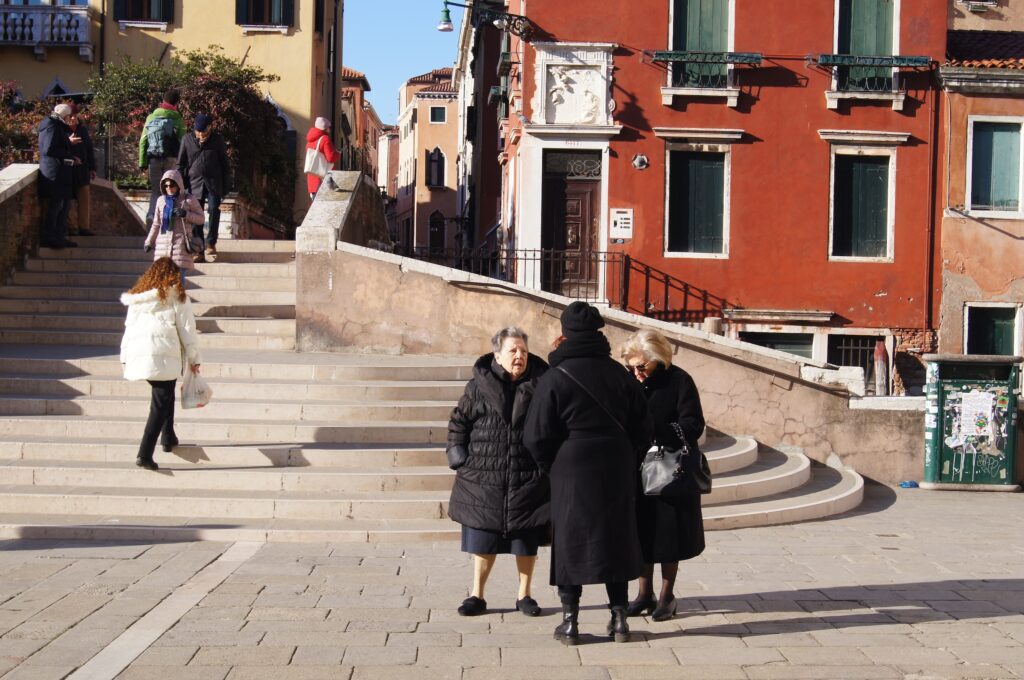
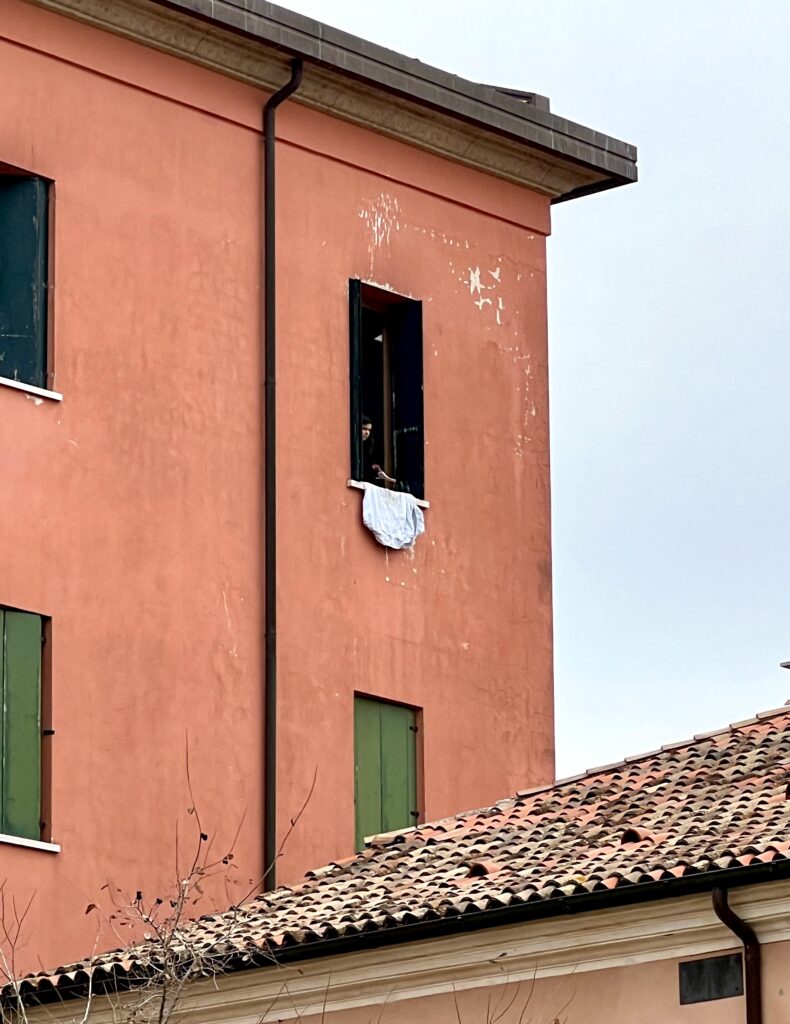
A working man takes a break. A couple of ladies meet in the square. A salesman waits for customers. An ambulance boat floats anonymously through the canals. A woman hangs cloths from a window. A man sits in the cavities of a building.
Each moment activates the stage — the backdrop on which an existential oscillation between labor and rest, waiting and moving, solitude and encounter unfolds.
Every now and then acqua alta resets the stage. The oscillation between street, square, land, water, working and resting is suspended. Definitions flatten. As the tides rises, the ordinary rhythm pauses and the edges of the city — and its modes of being are temporarily redefined. Ambiguity emerges.
As the ground disappears, seperation dissolve.
The city and its inhabitants momentarily engage in unison.
A collective adaptation.